Switzerland, often celebrated for its precision and natural beauty, also boasts a vibrant and evolving contemporary art scene, particularly in the realm of abstract sculpture. While the towering legacy of figures like Alberto Giacometti continues to inspire, a new generation, alongside established artists, are pushing the boundaries of form, material, and concept. This article invites you to discover five Swiss abstract and conceptual sculptors whose diverse practices reflect a rich tapestry of artistic inquiry and innovation. From the tactile exploration of René Mayer’s forms to the immersive soundscapes of Zimoun, these artists offer compelling perspectives on how we perceive and interact with the world through sculpture. We delve into their unique approaches, examining how they distill complex ideas into compelling visual and sensory experiences.
Ugo Rondinone: The Poetics of the Everyday and the Monumental
A Multidisciplinary Visionary
Ugo Rondinone, born in Brunnen, Switzerland, in 1964, is a globally recognized artist celebrated for his multidisciplinary approach that spans sculpture, painting, photography, and video. His work often explores themes of time, nature, and the human condition, frequently imbued with a sense of melancholic beauty and spiritual contemplation. Rondinone’s art is characterized by its ability to transform everyday objects and natural elements into profound, often monumental, statements. He challenges perceptions of reality by manipulating scale, repetition, and material, inviting viewers into introspective experiences. His practice is deeply rooted in a poetic sensibility, frequently drawing inspiration from literature, philosophy, and folk traditions, making his abstract forms resonate with universal human emotions. His pieces are instantly recognizable for their distinctive aesthetic and their capacity to evoke both wonder and reflection.
Monumental Sculptures and Natural Forms
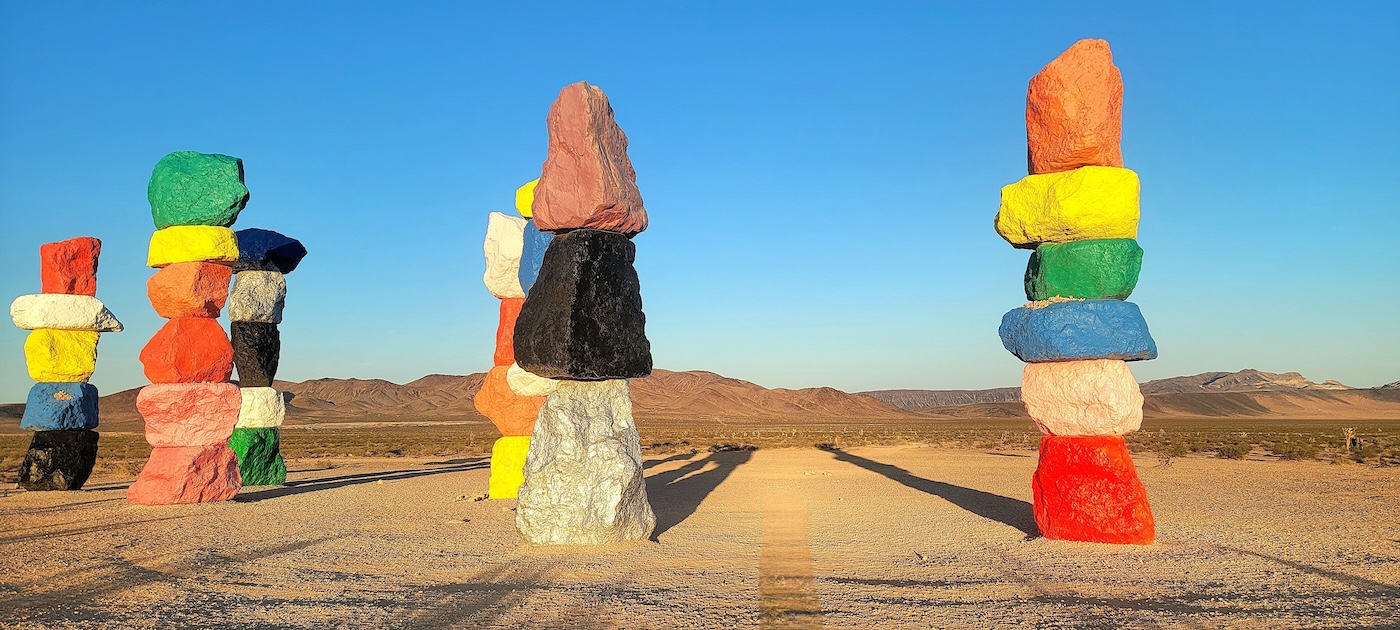
Rondinone is perhaps best known for his large-scale public sculptures, which often utilize natural elements like rocks, branches, and light. His most iconic series, for example, features towering stacks of roughly hewn boulders, painted in vibrant, fluorescent colors, that evoke ancient cairns or totems. These works are both primitive and contemporary, celebrating the raw power of nature while injecting a playful, almost spiritual, artificiality. Another notable series involves cast bronze trees, painstakingly replicated from actual olive trees, then painted white, turning organic forms into ghostly, contemplative figures. These sculptures often blur the lines between landscape and art, inviting viewers to consider their place within both the natural and manufactured worlds. His ability to imbue simple forms with monumental presence is a hallmark of his abstract sculptural language.
The Rainbow: A Recurring Motif
Key recurring motifs in Rondinone’s oeuvre include rainbows and clowns, which, despite their seemingly whimsical nature, carry deep symbolic weight. The rainbow motif appears in various forms, from large-scale neon installations spelling out phrases like ‘HELL, YES!’ to painted canvases, symbolizing hope, diversity, and the ephemeral beauty of life. The symbol reinforces Rondinone’s vision to explore the full spectrum of human experience, using abstract and representational forms to create a cohesive, emotionally resonant narrative.
International Recognition and Public Engagement
Ugo Rondinone’s work has achieved widespread international recognition, with major exhibitions in prestigious institutions globally, including the Rockbund Art Museum in Shanghai, the Palais de Tokyo in Paris, and the Museum of Contemporary Art Australia. His public art installations, such as ‘Seven Magic Mountains’ near Las Vegas, have become cultural landmarks, drawing millions of visitors and sparking conversations about art in public spaces. This particular installation, featuring seven towering stacks of painted rocks, stands as a vibrant beacon in the desert, a contemporary land art piece that connects with both the ancient and the modern. Rondinone’s ability to create work that is both intellectually stimulating and widely accessible has solidified his position as one of the most influential contemporary artists today, demonstrating the power of abstract sculpture to engage diverse audiences and provoke meaningful dialogue. His commitment to public art reflects a desire to make art an integral part of the shared human experience.
René Mayer: Distilling Human Presence Through Form
A Lifelong Investigation into Perception
René Mayer, born in Basel in 1947, is a Swiss contemporary artist whose expansive five-decade career deeply explores how individuals perceive, feel, and engage with their environment. His sculptural practice, rooted in Bauhaus principles learned at the School of Arts and Crafts in Basel, merges technical precision with an intuitive material exploration. Mayer’s work is a testament to the power of distilled forms, often reflecting profound inquiries into themes like environmental fragility, the psychology of looking, and the body as a symbol. His sculptures, whether vibrant terracotta figures or austere marble and granite pieces, invite viewers to slow down and discover depth in overlooked details, a subtle yet persistent call to pay closer attention to the world around us. For a more complete overview of his life and work, consider reading the biography of René Mayer.
The Viva Viva Series: Collective Gesture and Vibrant Expressions
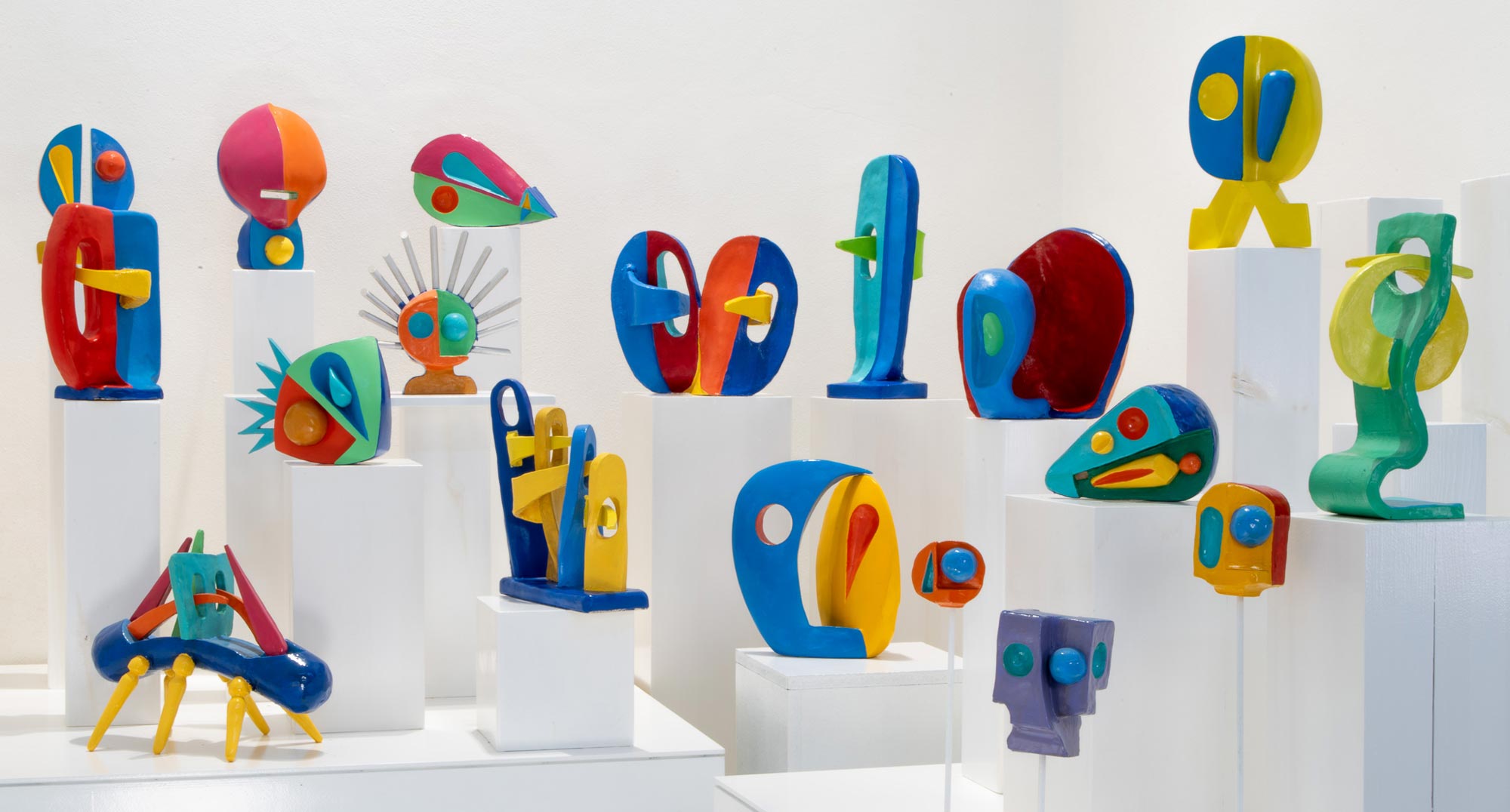
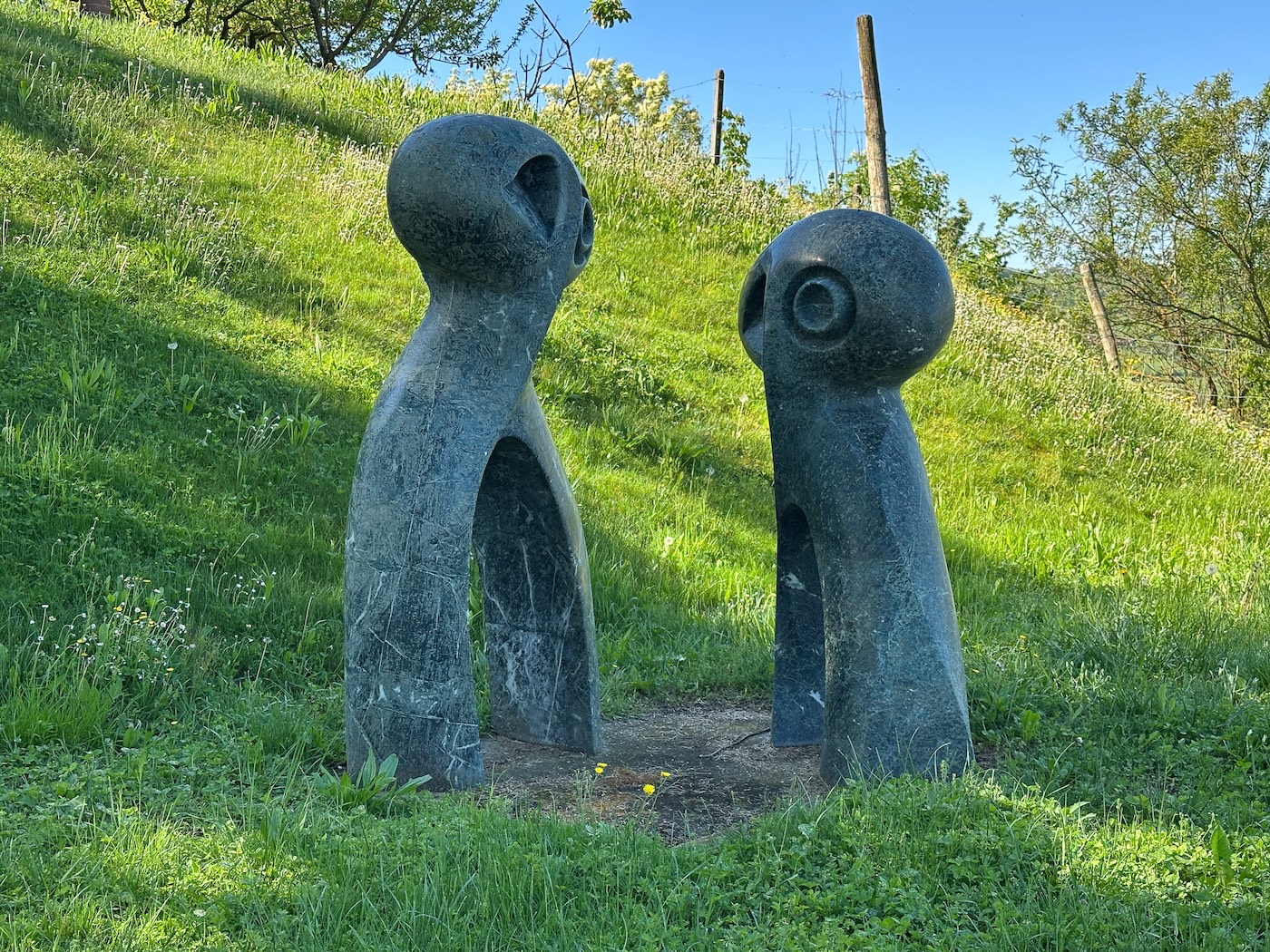
Among Mayer’s significant sculptural bodies of work is the ‘Viva Viva’ series, a collection of vibrant terracotta figures. These sculptures draw inspiration from a rich tapestry of cultural influences, including Mexican folk art and Basel’s lively Fasnacht carnival, reflecting Mayer’s deep interest in collective human gestures. Created during long, immersive studio nights, Mayer recalls a ‘frenzy of colors’ as the bare terracotta forms called for sun, life, and bright shades. The figures are not solitary; instead, they are arranged to lean, overlap, and lock gazes, appearing to communicate silently. Their interactions evoke intimacy, curiosity, and the permeable nature of boundaries, suggesting that each sculpture is an integral part of a shared, living dialogue. This series vibrantly captures the essence of human connection and communal experience.
Marble and Granite: Dualities and Essential Forms
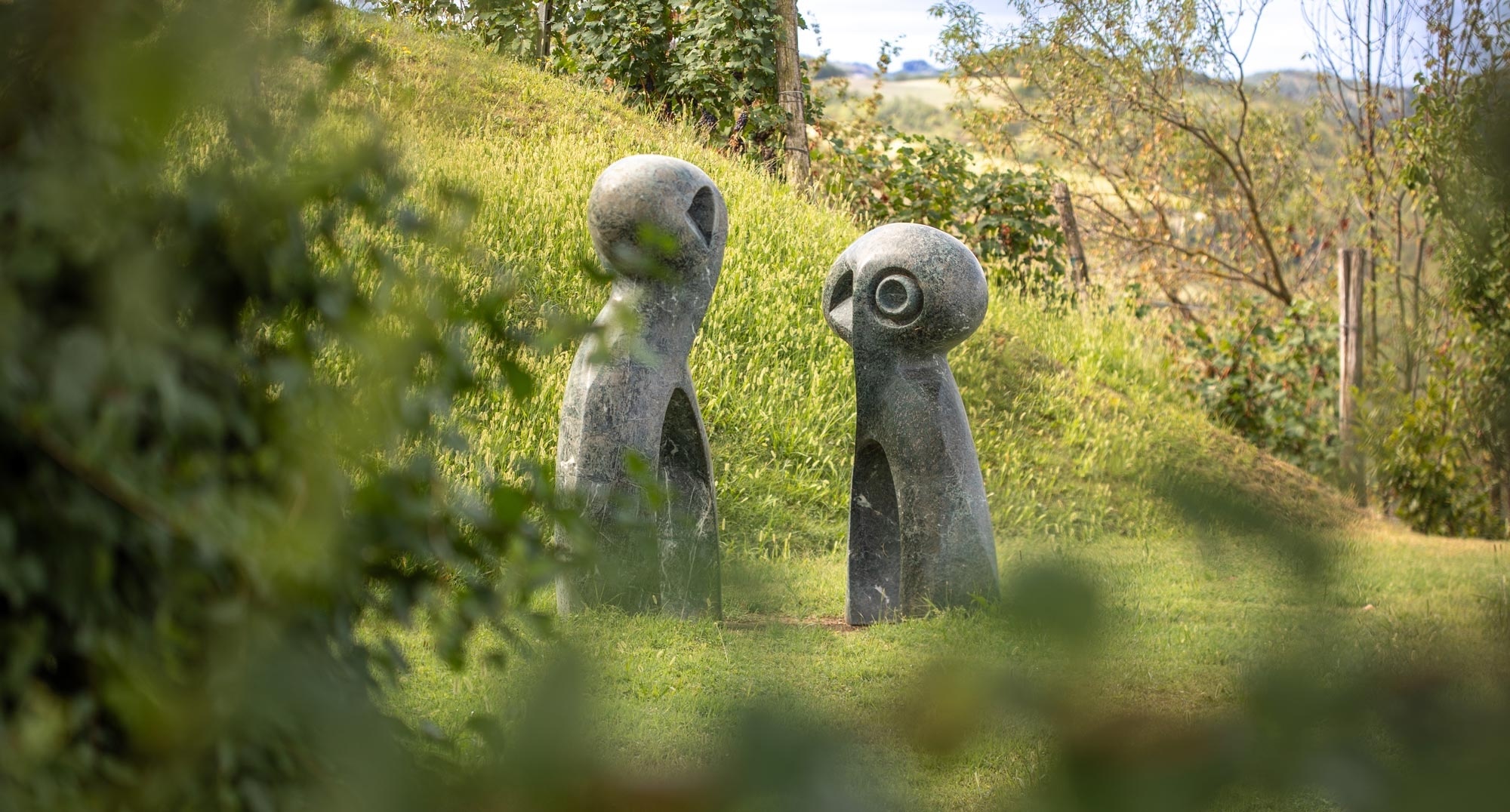
The sculptures crafted from marble and granite represent another major facet of René Mayer’s practice, exploring the idea that the human figure can be reduced to its most essential forms without losing its expressive power. These works delve into profound dualities: masculine and feminine, presence and absence, unity and separation. Heads, torsos, and stylized limbs are pared down, reconfigured, or mirrored, creating open-ended symbols of intimacy and tension. Some pieces feature two faces turned away, while others are hollowed or split, conveying vulnerability or estrangement. For Mayer, these sculptures are a means to question human relationships and endurance, echoing the timeless purity of forms found in traditional African art, which deeply inspires him.
Creative Process and Collaborative Precision
René Mayer’s sculptural practice is characterized by a rigorous process that begins with extensive clay modeling. This initial phase is the true core of his creation, allowing him to freely explore volumes and experiment with modifications in real-time, capturing the spontaneous energy of his artistic gesture. It is at this stage that he refines the composition before translating it into stone. Once the clay model is perfected, Mayer collaborates with specialized workshops for the carving of marble or granite. These highly skilled artisans employ traditional techniques to faithfully reproduce the initial model in raw stone. Mayer closely supervises each stage of this execution, ensuring that the spirit of the work is preserved and that the stone accurately conveys his original intent. This blend of intuitive design and technical precision aligns with a long-standing sculptural tradition, from the Renaissance to modern art, where clay models serve as crucial preparatory stages for direct carving.
Zimoun: The Architecture of Sound and Motion
Kinetic Sound Sculptures
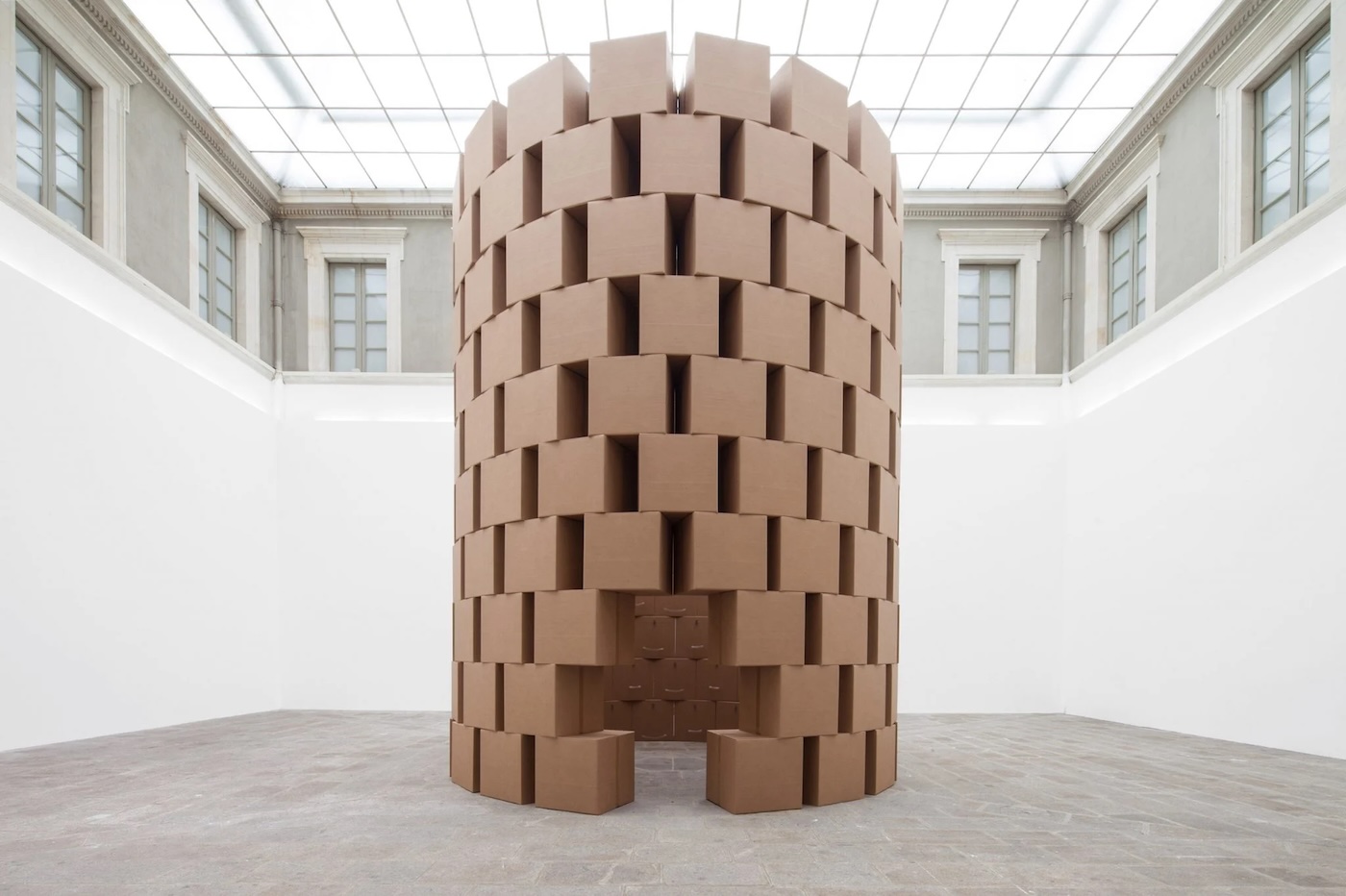
Zimoun, born in Bern, Switzerland, in 1977, is an artist renowned for his immersive kinetic sound sculptures and installations. His work occupies a unique space at the intersection of architecture, sound art, and minimalist sculpture. Using simple, often industrial, materials such as DC motors, cotton balls, cardboard boxes, and various recycled objects, Zimoun creates complex systems that generate intricate acoustic and visual patterns. His installations are characterized by their repetitive, almost meditative, movements and the subtle, organic sounds they produce, transforming sterile environments into living, breathing soundscapes. Zimoun’s practice challenges traditional notions of sculpture by incorporating time, movement, and sound as primary elements, making the viewer’s experience dynamic and multisensory. His pieces often evoke a sense of controlled chaos, where individual components contribute to a larger, evolving symphony of noise and motion.
Minimalist Aesthetics and Industrial Materials
At the core of Zimoun’s artistic philosophy is a commitment to minimalist aesthetics and the deliberate use of readily available, often industrial, materials. He transforms mundane objects like cardboard, plastic bags, and small motors into sophisticated artistic components, highlighting their inherent properties and potential for abstract expression. This approach not only makes his work accessible but also encourages a re-evaluation of everyday objects and their sonic capabilities. The visual simplicity of his installations belies the complexity of their sonic output, creating a captivating tension. By stripping down his palette to basic forms and raw materials, Zimoun emphasizes the fundamental principles of rhythm, repetition, and subtle variation, allowing the viewer to focus purely on the emergent patterns of sound and movement. This deliberate choice of materials underscores a fascination with the intrinsic qualities of matter and energy.
Immersive Environments and Sensory Experiences
Zimoun’s installations are designed to be immersive, transforming the exhibition space into a sensory environment. Viewers are often invited to walk through, around, and within his works, experiencing the interplay of sound and motion from multiple perspectives. The cumulative effect of hundreds or thousands of small motors activating various objects creates a rich, textured soundscape that is both ambient and dynamic. These environments are the opposite of static; they evolve over time, with subtle shifts in rhythm and tone, offering a unique experience with each visit. His ability to construct entire acoustic architectures out of simple elements creates a profound sense of presence and engagement, drawing the audience into a meditative yet stimulating dialogue with the artwork. The scale of his installations often envelops the viewer, making them an integral part of the sonic experience.
Global Recognition and Critical Acclaim
Zimoun’s innovative approach to sound sculpture has earned him significant international recognition and critical acclaim. His work has been exhibited extensively in museums and galleries worldwide, including the National Art Museum of China, the Museum of Contemporary Art MACBA in Barcelona, and the Hara Museum of Contemporary Art in Tokyo. Zimoun continues to push the boundaries of what sculpture can be, demonstrating the profound impact of sound and motion on our perception of space and form. His work is a testament to the power of abstract art to transcend traditional mediums and create entirely new sensory worlds, as new generations of artists explore the intersection of art and technology.
Athene Galiciadis: Pattern, Play, and Materiality
A Vibrant, Multidisciplinary Practice
Athene Galiciadis, born in Basel, Switzerland, in 1978, is an artist celebrated for her vibrant and multidisciplinary practice that seamlessly integrates sculpture, painting, textiles, and ceramics. Her work is characterized by a playful yet rigorous exploration of abstract forms, intricate patterns, and bold colors. Galiciadis often draws inspiration from diverse cultural sources, including folk art, ancient symbols, and contemporary design, blending them into a unique visual language that feels timeless, yet is also contemporary. Her sculptures, whether ceramic vessels or mixed-media constructions, are imbued with a sense of tactile curiosity and a joyful experimentation with materials. She approaches each medium with a fresh perspective, allowing the inherent qualities of clay, fabric, or wood to inform the final abstract composition. This eclectic approach makes her one of the most exciting Swiss abstract sculptors to discover today.
Abstract Forms and Intricate Patterns
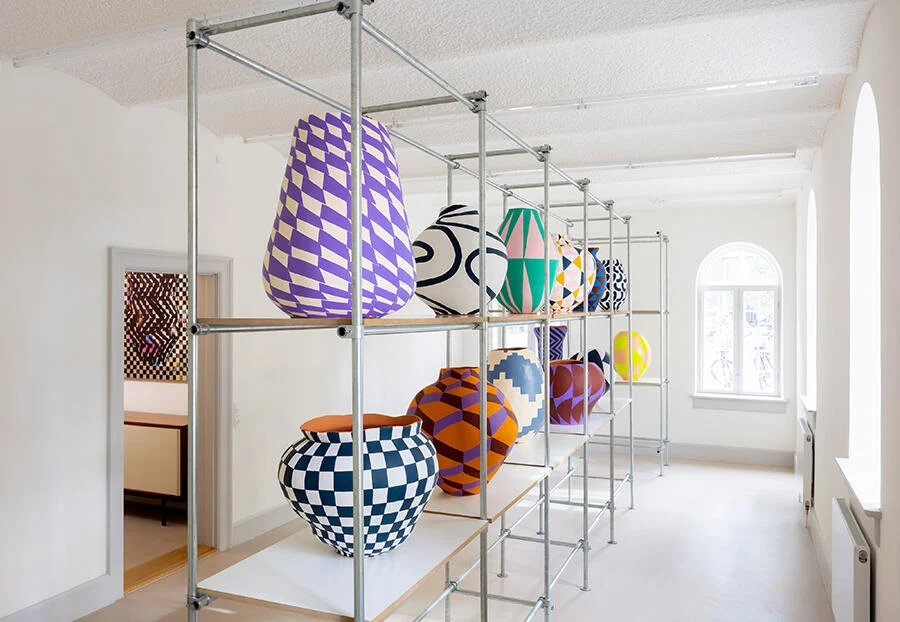
Galiciadis’s ceramic pieces often feature organic, biomorphic shapes adorned with elaborate, hand-painted motifs that evoke both natural growth and geometric precision. These patterns are not just decorative; they are integral to the structure and meaning of the work. She frequently employs a limited palette of bright, often primary colors, which enhances the graphic quality of her designs and imbues her sculptures with a palpable energy. The interplay of smooth and textured surfaces, solid forms, and intricate drawings creates a dynamic visual experience, inviting viewers to take in every detail. Her ability to merge complex patterning with simplified abstract forms is a hallmark of her distinctive style, pushing the boundaries of traditional craft into contemporary art.
Material Exploration: Ceramics to Textiles
Materiality is a central tenet of Athene Galiciadis’s artistic practice. While her ceramic sculptures are particularly notable for their intricate patterns and unique forms, she also extends her explorations into textiles and other media. Her textile works, often large-scale hangings, translate the same visual language of pattern and color into a different tactile dimension, exploring how woven structures can create new forms of abstraction. This cross-pollination between media allows her to continuously reinterpret her core artistic concerns, demonstrating the versatility of her abstract vision. By engaging with a range of materials, Galiciadis highlights the inherent qualities and expressive potential of each, whether it’s the malleability of clay, the softness of fabric, or the rigidity of wood. This ongoing experimentation with different materials enriches her sculptural output, offering diverse avenues for abstract expression.
Philosophical Underpinnings and Exhibitions
Beyond their aesthetic appeal, Athene Galiciadis’s works often carry subtle philosophical undertones, exploring themes of identity, memory, and the interplay between culture and nature. Her abstract forms and patterns can be seen as visual metaphors for complex ideas, inviting viewers to engage in a deeper interpretation. Her work has been exhibited in Switzerland and internationally, including at institutions like the Kunsthaus Glarus and Galerie Francesca Pia in Zurich, establishing her as a significant voice in contemporary Swiss art.
Roman Singer: The Poetics of Space and Transformation
Sculptural Interventions and Conceptual Depth
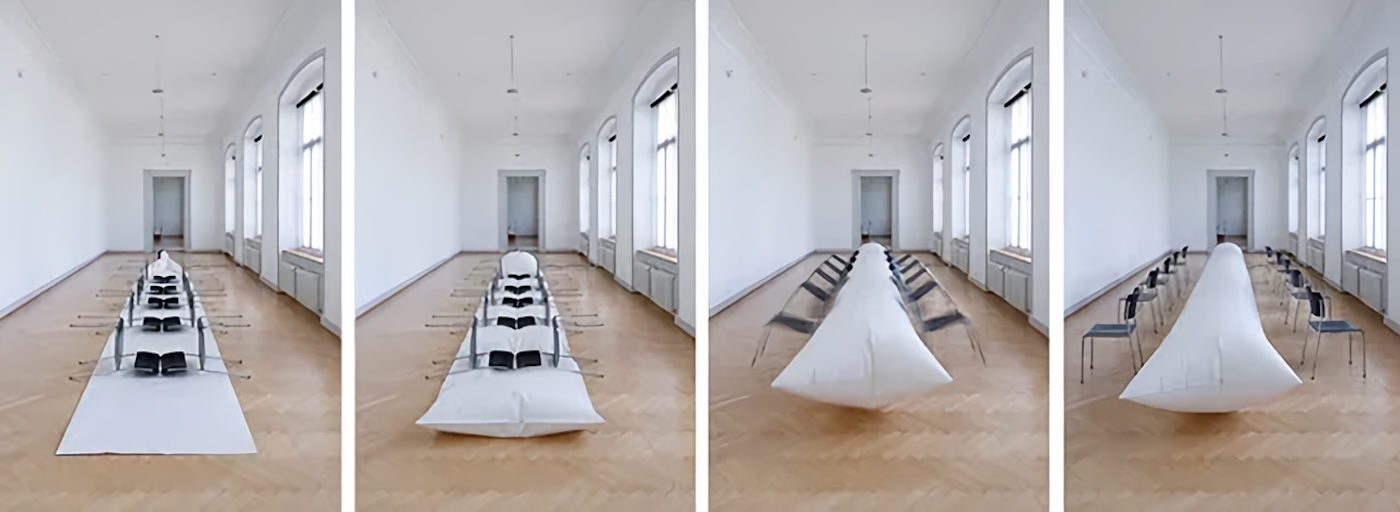
Roman Singer, born in Zurich, Switzerland, in 1957, is an artist known for his conceptually driven sculptural interventions and installations that often engage directly with architectural spaces and the natural environment. His work frequently explores themes of transformation, material presence, and subtle shifts in perception. Singer’s abstract sculptures are characterized by their minimalist aesthetic and a profound consideration of the materials he employs, which often include industrial elements, natural objects, and found items. He transforms these materials through processes of stacking, arranging, or subtly altering them, creating works that challenge the viewer’s understanding of form, weight, and balance. His practice invites contemplation on the relationship between object and space, often blurring the lines between art and its surroundings. Singer’s subtle yet impactful interventions make him a key figure among Swiss abstract sculptors today.
Materiality and the Ephemeral
Central to Roman Singer’s practice is a deep engagement with how materials can convey meaning and evoke a sense of the ephemeral. He often works with raw, unprocessed substances, allowing their inherent qualities – such as texture, weight, and color – to become integral to the sculptural form. His installations might feature meticulously arranged piles of industrial bricks, delicate stacks of stones, or carefully balanced wooden beams, each chosen for its specific properties and symbolic resonance. Singer highlights the transformative potential of these materials, often contrasting their permanence with the fleeting nature of their arrangement or the temporary existence of his site-specific works. This interplay between the enduring and the transient adds a layer of conceptual depth to his abstract compositions, inviting viewers to consider the passage of time and the impermanence of structures.
Site-Specific Works and Public Dialogue
Roman Singer is particularly renowned for his site-specific installations, which are meticulously conceived to interact with and respond to their immediate environment. Whether placed in an urban landscape, a gallery space, or a natural setting, his sculptures create a dialogue with their surroundings, altering the viewer’s perception of that space. These works often challenge conventional notions of permanence in public art, with some pieces designed to erode or change over time, reflecting natural processes. His public installations often invite community engagement, prompting passersby to pause and reconsider their familiar environments.
Dialogue with Space and Viewer Interaction
Singer’s abstract sculptures are carefully constructed invitations for interaction and contemplation. He designs his works to subtly influence the viewer’s movement through space, guiding their gaze and encouraging a prolonged engagement with the forms. The spatial relationships between his sculptural elements, as well as between the sculpture and its architectural context, are meticulously considered. This creates a dynamic interplay where the viewer’s position and perspective become crucial to understanding the artwork. His pieces often involve a delicate balance, both literally and metaphorically, prompting reflection on stability, precariousness, and the forces that shape our world. Roman Singer’s work consistently demonstrates how abstract sculpture can activate a space and profoundly influence the viewer’s experience, making the act of looking an active and participatory process, thereby enriching the discourse around contemporary art and its public interface.
Conclusion
The five Swiss abstract sculptors we’ve explored—Ugo Rondinone, René Mayer, Zimoun, Athene Galiciadis, and Roman Singer—each contribute a unique and vital voice to the contemporary art landscape. Their diverse practices, ranging from Mayer’s profound exploration of human presence in marble and terracotta to Zimoun’s immersive sound architectures, Rondinone’s monumental natural forms, Galiciadis’s vibrant patterns, and Singer’s conceptual spatial interventions, collectively illustrate the richness and dynamism of abstract sculpture in Switzerland today. These artists not only push the boundaries of form and material but also invite us to reconsider our perceptions of the world, challenging us to look, listen, and feel more deeply. Their work ensures that Swiss abstract sculpture remains a compelling and evolving field, rich with innovation and profound artistic inquiry, continuing to captivate audiences worldwide.