
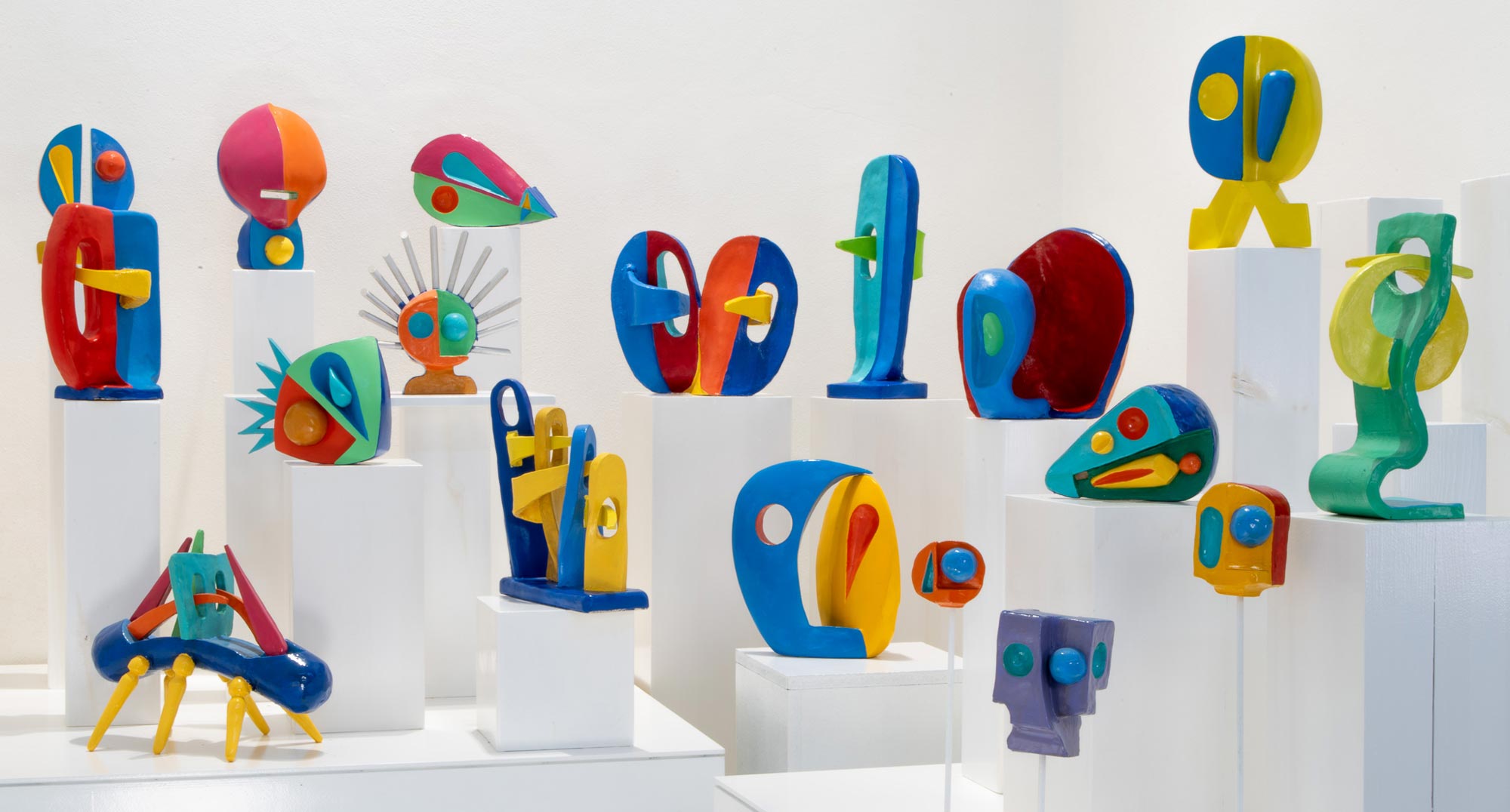

The Basel Carnival, known as Fasnacht, is one of the most iconic festivals in Switzerland and has captivated artists for centuries. This unique cultural phenomenon, deeply rooted in Swiss tradition, offers a kaleidoscope of imagery, emotion, and social commentary, making it an inexhaustible source of inspiration. From the haunting beauty of its masked figures to the rhythmic pulse of its parades, Fasnacht embodies a profound artistic spirit that transcends mere celebration. For artists like René Mayer, whose work spans over five decades and reflects a lifelong investigation into how people see, feel, relate to the world around them, the carnival has been a particularly potent muse. Mayer, a Basel native, grew up steeped in his traditions, and his “Viva Viva” series is a direct homage to his vibrant energy and expressive forms, showcasing his mastery in abstract sculpture and painting. This article delves into the Biography of René Mayer and explores how the Basel Carnival has inspired artists throughout history, from anonymous folk creations to the Mayer’s series.
The Enduring Legacy of Basel’s Fasnacht: A Historical Tapestry
Origins and Evolution of a Unique Tradition
The Basel Carnival, or Fasnacht, stands apart from other European carnivals, not least due to its timing and distinct customs. While most pre-Lenten celebrations conclude on Shrove Tuesday, Basel’s Fasnacht famously begins the Monday after Ash Wednesday at precisely 4:00 AM with the ‘Morgenstreich.’ Its roots stretch back to medieval times, evolving from pagan spring rituals and medieval jousting to the organized, yet anarchic, spectacle it is today. Over centuries, it absorbed influences from guild traditions, military parades, and civic life, gradually forging its unique identity. This rich history and its profound cultural significance led to its inscription in 2017 on the UNESCO Representative List of the Intangible Cultural Heritage of Humanity, recognizing its role as a vibrant, living tradition.
The Ritualistic Heart: Morgenstreich and Cortège
At the core of Fasnacht are its two main events: the ‘Morgenstreich’ and the ‘Cortège.’ The Morgenstreich is a truly unforgettable experience, plunging the city into darkness before the ‘cliques’ (groups of pipers and drummers) emerge with their giant, illuminated lanterns. The only light comes from these lanterns, casting an ethereal glow on the historic streets as the melancholic yet stirring melodies of piccolos and drums fill the air. This ritualistic dawn procession transforms Basel into a dreamlike realm. Following this, the ‘Cortège’ takes over, with thousands of masked and costumed participants parading through the city. Floats, known as ‘Wägen,’ and individual ‘Chaisen’ (horse-drawn carriages) carry satirical figures and scenes, distributing ‘Zeedel’ (satirical verses) and ‘Wurfmaterial’ (sweets and oranges) to the crowds.
Symbolism and Social Commentary in the Carnival
Fasnacht is a powerful platform for social commentary and artistic expression. The masks, or ‘Larven,’ and elaborate costumes allow participants to shed their everyday identities and embody characters ranging from traditional figures like the ‘Waggis’ (a caricature of an Alsatian farmer) and ‘Alti Tante’ (old aunt) to contemporary political caricatures. This anonymity fosters a unique freedom to critical society, politics, and local events through satirical ‘Sujets’ (themes) depicted on lanterns and floats. The ‘Schnitzelbänke’ (humorous verses sung in local dialect in pubs) further amplify this tradition of sharp-witted social criticism, often targeting local and international controversies with biting humor.
The Fasnacht as a Collective Artistic Expression
The entire city of Basel becomes a grand, ephemeral art installation during Fasnacht. The creation of the ‘Laternen’ is a highly artistic endeavor, with cliques spending months designing and painting these intricate, illuminated sculptures that often reach several meters in height. Each lantern tells a story, commenting on the chosen ‘Sujet’ with detailed imagery and often hidden symbolism. The costumes themselves are works of craftsmanship, meticulously designed and handcrafted. The collective movement of the cliques, the synchronized drumming, the swirling colors, and the atmospheric lighting all combine to create a grand, immersive performance art piece that engages thousands of participants and spectators alike, making the city itself a canvas for this extraordinary, temporary art festival. More on the history can be found at Basel.com.
Early Artistic Dialogues: Capturing Fasnacht’s Spirit
Folk Art and Early Depictions
Before the advent of photography, the Basel Carnival was primarily documented and celebrated through various forms of folk art and illustration. Early artisans and anonymous artists captured the essence of Fasnacht in woodcuts, engravings, and popular prints. These early depictions often focused on the distinctive masks, exaggerated characters, and the general revelry of the parades. They served not only as records but also as a means of disseminating the carnival’s spirit to a wider audience, solidifying its imagery in the collective consciousness. These works, though often simple in execution, are invaluable historical documents, offering glimpses into how the carnival evolved and how its visual language developed over time.
The Influence on Regional Painters and Illustrators
As the centuries progressed, the Basel Carnival began to attract the attention of more formally trained artists. Regional painters and illustrators found endless inspiration in the festival’s vibrant scenes. The dramatic contrasts of light and shadow during the Morgenstreich, the intricate details of the costumes, and the dynamic energy of the parades provided rich subject matter. Artists sought to capture the fleeting moments of joy, satire, and mystery that define Fasnacht. Their canvases and sketches often highlighted the unique atmosphere of the carnival, translating its sounds and movements into visual narratives. These works helped to elevate Fasnacht from a local custom to a recognized artistic theme within Swiss art.
Masks and Costumes as Sculptural Forms
The ‘Larven’ (masks) and costumes of Fasnacht are, in themselves, profound works of art. Crafted with meticulous detail, often from papier-mâché, wood, or fabric, they embody a rich tradition of craftsmanship. Each mask is designed to transform the wearer, offering anonymity and allowing for a complete immersion into the carnival’s character. The ‘Waggis’ mask, with its exaggerated features, or the elegant ‘Harlequin’ and ‘Pierrot’ figures from the Commedia dell’arte, are iconic examples. These masks are sculptural forms that convey emotion, character, and often, a sense of ancient ritual. The entire ensemble – mask, costume, and accompanying props – creates a moving, living sculpture that parades through the city streets. The intricate design and cultural significance of these elements underscore the inherent artistic value embedded within the carnival tradition.
Carnival’s Role in Shaping Local Artistic Identity
Fasnacht has played a pivotal role in shaping Basel’s artistic identity. For generations of local artists, it has provided a distinctive cultural backdrop, a shared experience that resonates deeply within the community. The carnival’s themes of transformation, satire, and communal celebration have been seen into the broader artistic discourse of the city. It fosters a unique blend of high art and folk tradition, where the line between participant and artist often blurs. The shared act of creating lanterns, designing costumes, and performing in the parades instills a collective artistic spirit. This deep connection ensures that the Basel Carnival remains not just a historical event but a continuous source of inspiration, perpetually renewing its artistic relevance for new generations of creators.
Modern Interpretations: Fasnacht in Contemporary Art
Avant-Garde Encounters with Traditional Forms
As the 20th century unfolded, modern and avant-garde artists began to engage with the traditional forms of the Basel Carnival in new and exciting ways. Instead of simply documenting the event, they reinterpreted its symbols, pushing the boundaries of how Fasnacht could be perceived and represented. Artists explored the psychological depth of the masks, the abstract patterns of the parades, and the inherent theatricality of the event. This period saw a fusion of traditional carnival motifs with emerging artistic movements, from Expressionism to Surrealism, creating works that were both deeply rooted in local culture and universally resonant. The tension between the ancient rituals and contemporary artistic sensibilities yielded powerful and thought-provoking creations, reflecting the carnival’s timeless adaptability.
Photography and Film: Documenting the Ephemeral Art
The advent of photography and film revolutionized the way Fasnacht’s ephemeral art could be captured and shared. Photographers became crucial chroniclers, freezing the dynamic movement and intricate details of the carnival that were otherwise fleeting. They documented the elaborate costumes, the expressions behind (or through) the masks, the atmospheric lighting of the Morgenstreich, and the sheer scale of the Cortège. Early filmmakers captured the kinetic energy of the parades, allowing future generations to experience the carnival’s rhythm and spectacle. These visual archives have not only preserved the history of Fasnacht but have also become works of art in themselves, offering unique perspectives on the festival’s visual narratives and its evolution over time, highlighting the artistry of documentation.
Basel’s Art Scene and Fasnacht’s Enduring Appeal
Basel’s reputation as a global art hub, home to institutions like the Kunstmuseum Basel, the Fondation Beyeler, and the renowned Art Basel fair, creates a fertile ground for the carnival’s enduring artistic appeal. Contemporary artists in Basel, whether internationally acclaimed or emerging talents, continue to find Fasnacht a compelling subject. The dialogue between the city’s high art institutions and its deeply rooted folk traditions is a constant source of inspiration. The carnival provides a local, authentic counterpoint to the globalized art market, reminding artists of the power of community, tradition, and collective creativity. This unique synergy ensures that Fasnacht remains a vital force in the ongoing narrative of Kunstmuseum Basel exhibitions and artistic innovation, continually inspiring new interpretations and artistic forms.
René Mayer’s “Viva Viva” Series: A Carnival of Forms and Colors
Early Life and Fasnacht’s Deep Roots
René Mayer, born in Basel in 1947, grew up immersed in the city’s rich cultural tapestry, including its iconic Fasnacht. His early life in this cosmopolitan city, at the intersection of three cultures, deeply influenced his worldview and artistic sensitivity. Attending the carnival year after year, Mayer absorbed its unique energy, the vibrant hues of the costumes, the evocative power of the masks, and the exhilarating sense of communal liberation. This early exposure to Fasnacht’s expressive forms and its underlying spirit of joyful chaos became a foundational element in his artistic psyche, an unconscious well-spring from which later works, like “Viva Viva,” would draw their profound resonance.
Inspiration and Genesis of “Viva Viva”
The “Viva Viva” series by René Mayer is a powerful testament to the enduring influence of the Basel Carnival. While initially sparked by an exhibition of ancient Mexican statuettes, Mayer quickly recognized a deeper, more personal connection to his hometown’s Fasnacht. The pierced, hollowed-out, or artificially protruding eyes of the terracotta figures in “Viva Viva” immediately recall the distinctive masks of the Basel Carnival. This series provides an initial input for a path of investigation in search of aesthetic, cultural, and formal sedimentations. The figures, with their joyful and liberating procession, free of inhibitions, mirror the unbridled spirit of the carnival, where animals, spirits, and Commedia dell’arte characters parade through the streets, poetically illuminated by lanterns.
Movement, Color, and Interconnectedness in the Series
Movement is a constant feature in Mayer’s work, both in painting and sculpture, and it pulsates through “Viva Viva.” The terracotta figures appear animated, often arranged in sequences that suggest a collective presence, echoing the continuous flow of carnival processions. There’s a sensual sinuosity of forms, made up of continuous crossings between figures and elements that are always on the verge of folding in themselves or moving away in a slow twist. The bright coloring of these terracottas gives them a more strongly characterizing element, eliminating any possible uncertainty or hesitation to explicitly declare their vital, joyful, almost playful dimension. Mayer’s use of color, mindful of Henri Matisse’s masterpiece The Dance, and his attention to contrast, directly express a recovery of color theory. Furthermore, the series explores interconnectedness, with figures leaning toward one another, joining hands, locking gazes, and even merging entirely, their boundaries porous and elastic, reflecting the communal spirit of Fasnacht.
Craftsmanship and the Spirit of “Viva Viva”
Mayer’s professional background in design is evident in the “Viva Viva” series, reflected in his search for clean, modeled, enveloping surfaces and volumes. The figures lose their roundness only in the points that cross the empty spaces within them, creating a fundamental contrast that certifies the vitalistic aspect of these works. The series is an exuberant celebration of form, color, and connection, a world of playful terracotta figures shaped by driftwood and inspired by the elated chaos of Basel’s Fasnacht carnival. Mayer himself describes the creation process as an immersive, almost ecstatic experience, an “artistic frenzy” where the “bare terracotta called for sun, life, and bright shades: Viva Viva!” This deep engagement with the material, combined with his lifelong connection to the carnival, infuses “Viva Viva” with a tangible uniqueness and a presence that resists all forms of replication.
Conclusion
The Basel Carnival, Fasnacht, stands as a vibrant testament to the enduring power of art, tradition, and community. From its medieval origins to its modern-day spectacle, it has consistently offered a rich tapestry of visual and performative art, inspiring generations of creators. Artists have found in its masks, movements, and satirical themes an unparalleled source of creativity, reflecting the human condition with both humor and depth. René Mayer’s “Viva Viva” series is a powerful contemporary echo of this legacy, embodying the carnival’s joyful spirit and intricate forms through his unique sculptural language. His work, deeply rooted in his Basel heritage, reminds us that the most profound artistic expressions often emerge from the confluence of personal experience and shared cultural heritage. The Basel Carnival continues to be a living art form, a dynamic interplay of history, creativity, and collective human spirit, forever shaping the artistic landscape of Switzerland and beyond.